Cape Fur Seals – Biology and Health
Cape fur seal health
Healthy oceans are essential for both marine and human populations. Studying marine animal health can indicate ocean health and becomes essential if wild animals have diseases which may spread to other species, including the people they interact with. There are almost 1 million Cape fur seals around South Africa. They are very popular with tourists who enjoy watching them at the coast as well as swimming with seals. However, in recent years seals have attacked swimmers, causing serious injuries and distress. In 2024, our work found rabies was circulating in the seal population. Every month, there are more reports of seals with rabies along the coast of South Africa. This affects animal welfare and may also be a disease risk to humans. This project brings together experts with different skill sets to help better understand seal health and investigate new disease processes. We will provide key data on how the current rabies outbreak is affecting seals, as well as help wildlife managers act during this outbreak. We will also look at the impact of the rabies outbreak on how water users think about the ocean and seals, and how healthcare workers respond to bite victims. This work looks at the links between wildlife, people and the environment – an approach known as ‘One Health’. We hope to improve wild seal health and wellbeing – as well as benefitting the coastal communities of people who share their habitat. We will help to pinpoint and protect against this and other emerging diseases affecting marine mammals.
SUPPORT THIS RESEARCH — Each test for rabies costs R1000

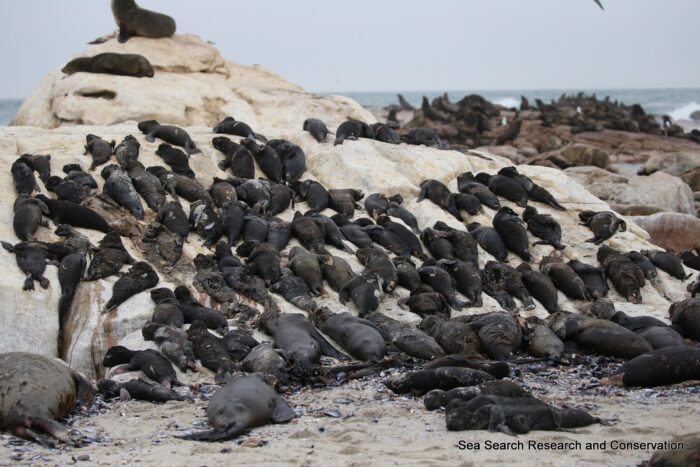
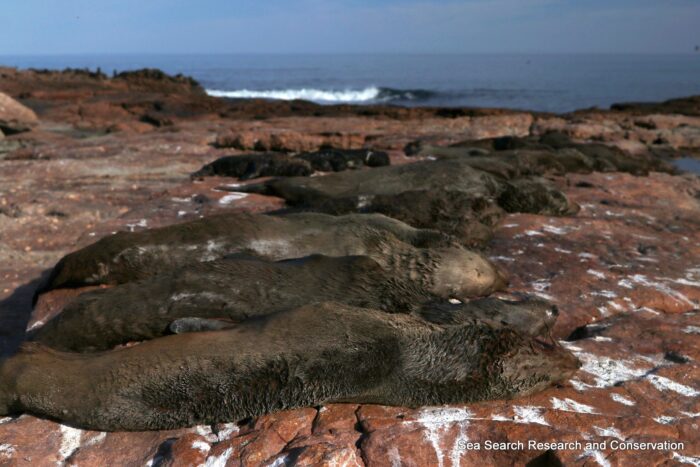
Following the mass mortality event in 2021 we have been conducting ongoing research and monitoring of Cape fur seals to better understand their biology and health.
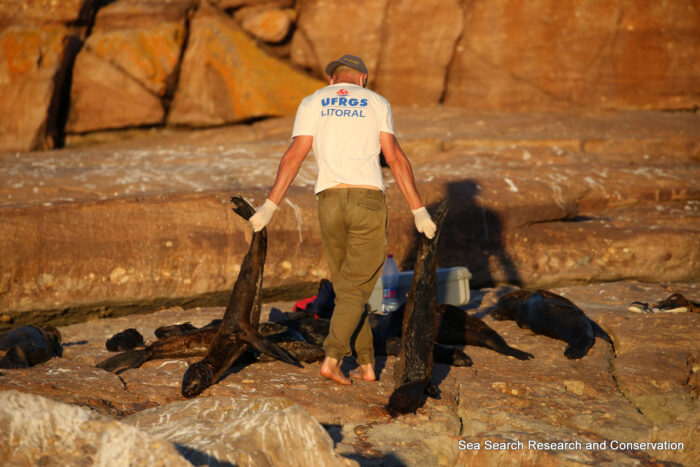
Regular mortality surveys are conducted around Cape Town with local partners . We also conduct mortality and entanglement surveys in Elands Bay and Lamberts Bay which are self-funded. A wide range of data is collected during these mortality surveys including biological samples, age and sex cohorts, and length. Monitoring in Namibia is currently also done through a network of local partners established through the Namibian Dolphin Project
Since 2020 we have conducted well over 150 necropsies of Cape fur seal carcasses collecting a wide range of biological samples for biological research (diet, vocal tracts and whiskes etc) as well as disease and health monitoring for histopathology, pollutant analysis etc – We are open to collaboration on analysing these samples.. Necropsies have slowed substantially since the discovery of rabies due to much tighter regulations and permitting around this notifiable disease making understanding broader health issues much more challenging.
Conducting this research and monitoring is costly, and a vast majority of the work we do is not funded. We rely solely on donations to run the project which has since run out. If you would like to donate towards our project, please visit …… (Insert link or contact or something).
Our project also incorporates citizen science data of Cape fur seal sightings, strandings and carcasses. If you would like to contribute to the project please visit Cape Fur Seal Citizen Science · iNaturalist to upload your pictures.